Cardiovascular disease is a central pressure point for healthcare planning in the Kingdom. Mordor Intelligence states cardiovascular disease accounts for more than 45% of deaths in Saudi Arabia, while diabetes prevalence stands at 23.1% among adults. That overlap matters because diabetic vessels can be complex, and the same source notes coronary stent cases are increasingly supported by intravascular ultrasound to optimize deployment in calcified lesions. In this context, the Saudi cardiac care market is not just about more procedures. It is about building capacity across the full pathway, from screening and diagnostics to intervention and follow-up.
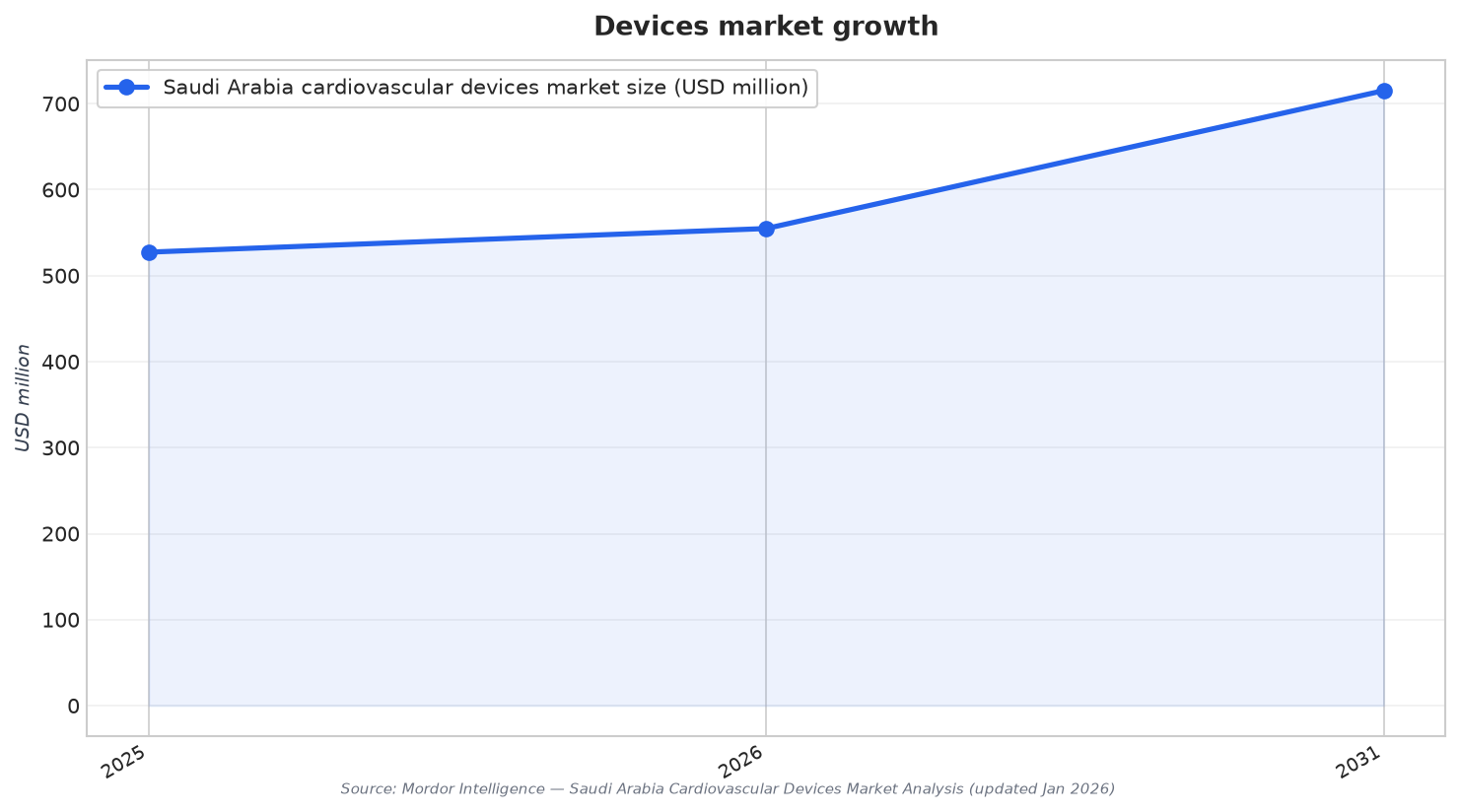
On the medical device side, Mordor Intelligence projects the Saudi Arabia cardiovascular devices market to expand from USD 527.33 million in 2025 and USD 554.80 million in 2026 to USD 715.19 million by 2031, registering a CAGR of 5.21% between 2026 and 2031. The same report links the expansion to Vision 2030’s USD 65 billion health-care envelope, describing modernization of catheterization laboratories, hybrid operating rooms, and virtual-care hubs. In 2025, therapeutic and surgical devices led with 64.20% market share, hospitals held 68.20% of revenue share, and coronary artery disease represented 48.50% of the market by application, pointing to where demand is most concentrated today.
Diagnostics and Digital Follow-Up Are Moving Closer to the Patient
Diagnostics are also being scaled through policy, purchasing, and clinical preference. Ken Research values the Saudi Arabia cardiac biomarker market at USD 740 million based on a five-year historical analysis, and notes that Riyadh, Jeddah, and Dammam dominate due to advanced healthcare infrastructure and investment in healthcare technology. Those cities account for nearly 70% of unit demand in the cardiovascular segment, reinforcing their role as referral anchors for complex cases. In 2023, the Saudi Food and Drug Authority implemented the “Medical Devices Interim Regulation,” establishing a streamlined approval process for in vitro diagnostic medical devices, including cardiac biomarker tests, with requirements spanning pre-market approval, post-market surveillance, and local representation.
Digital cardiovascular care is another capacity lever, especially for monitoring and continuity between visits. Grand View Research reports the Saudi Arabia digital health for cardiovascular market generated USD 190.0 million in revenue in 2024 and is expected to reach USD 673.7 million by 2030. It also describes Saudi Arabia as the fastest growing regional market in the Middle East & Africa, and attributes adoption to smartphone penetration and better network coverage. Separately, Mordor Intelligence projects diagnostic and monitoring devices to post the fastest 5.93% CAGR to 2031, while home care settings are forecast to grow at a 6.71% CAGR through 2031, aligning remote monitoring growth with a broader shift in care delivery.
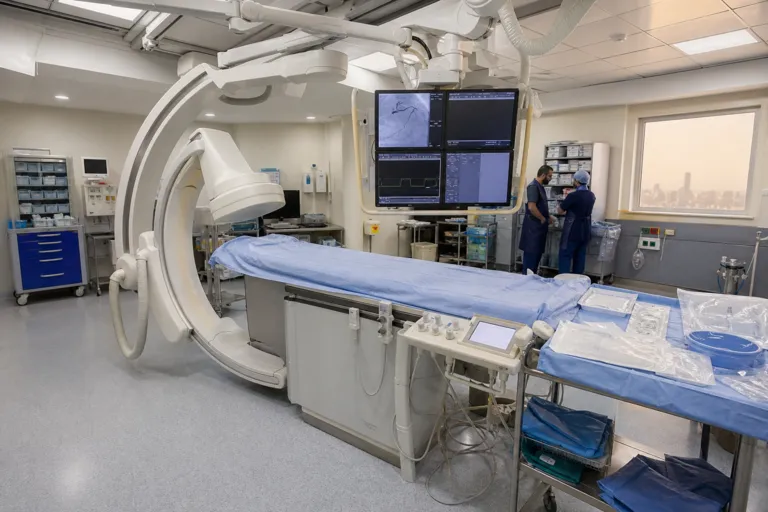
Capacity building is not only about flagship centers. IndexBox highlights an opportunity in expanding cardiac catheterization lab capacity in secondary cities such as Madinah, Dammam, Tabuk, and Abha, where hospital networks are being upgraded but capital budgets are more constrained than in Riyadh and Jeddah. That framing fits a system that needs both scale and resilience, including service models that keep equipment productive. Mordor Intelligence also notes localization incentives that encourage multinationals to assemble stents and pacemakers inside the Kingdom, alongside a shift toward value-based reimbursement structures. Together, these threads show a care system building the tools, workflows, and approvals needed to treat heart disease earlier and manage it longer.
What is driving growth in Saudi Arabia’s cardiac devices market?
Which device categories and care settings lead today?
How large is Saudi Arabia’s digital health market for cardiovascular care?
What is changing for cardiac biomarker testing regulation in Saudi Arabia?
How is the Saudi cardiac care market expanding beyond major cities?