
Periods of geopolitical instability can exert tremendous pressure on healthcare systems worldwide, and Saudi Arabia is no exception. As conflicts and uncertainties spread across the Middle East, there is an increased demand for medical services, emergency preparedness, and healthcare infrastructure. This dynamic has prompted the Kingdom to ramp up its investments in healthcare, aiming to improve resilience and capacity. As a result, private healthcare opportunities are emerging, especially as the government prioritizes the long-term strengthening of its health systems.
A Major Shift Towards Healthcare Investment
Saudi Arabia is actively preparing for a major transformation in its healthcare sector. The Kingdom is expected to invest a staggering $66.67 billion in healthcare infrastructure in the coming years. The government has set ambitious targets, including increasing private sector participation to 65% by 2030. This investment will help build the infrastructure needed to address the growing healthcare needs of its population. Importantly, the plan includes the privatization of 290 hospitals and 2,300 primary health centers by 2030, which will open significant investment opportunities for the private sector.
The privatization plan represents a significant shift in the Kingdom’s approach, unlocking major capital inflows. The government aims to ensure that private healthcare players have an increased role in providing services, which will drive growth and innovation in the sector. Private healthcare investors can take advantage of this transformation by tapping into new market opportunities, particularly as the government focuses on resilience in the face of regional instability.
Geopolitical Instability and the Growing Demand for Healthcare Services
Geopolitical instability in neighboring regions, particularly in conflict zones such as Gaza, has highlighted the vulnerabilities of regional healthcare systems. In areas like Gaza, where 94% of healthcare facilities have been damaged or destroyed, healthcare systems are stretched to the limit. These events underscore the critical need for robust healthcare services, which often lead to an increased demand for cross-border medical services. Saudi Arabia, as a neighboring country, faces the brunt of this influx, as people seek medical care that is no longer available in their home countries.
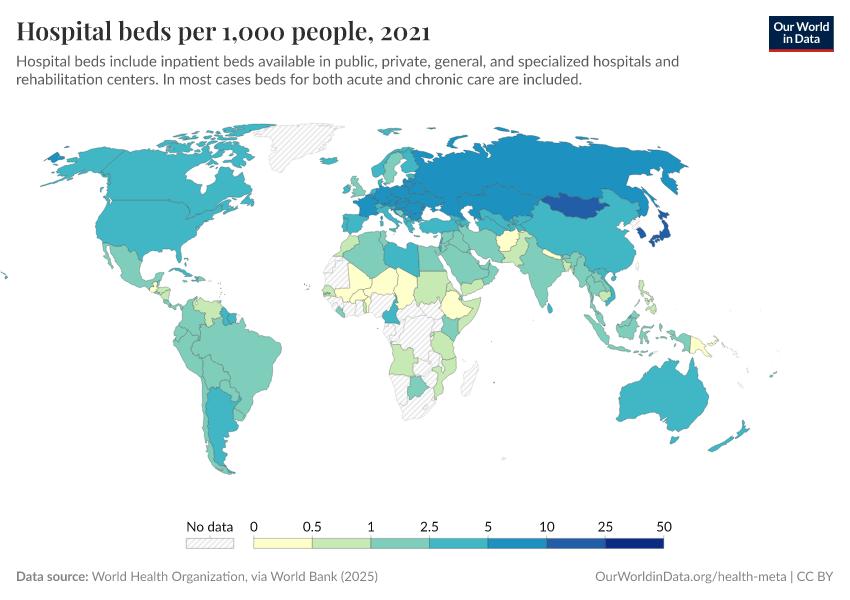
In addition to regional instability, Saudi Arabia faces a workforce shortage and under-capacity in its healthcare facilities. Currently, the Kingdom has only 2.1 hospital beds per 1,000 people (2021), which is far below the international standard. This figure presents a significant bottleneck for the healthcare sector, especially during times of geopolitical stress. As more people require medical services due to regional conflicts, the demand for hospital beds and healthcare professionals will only increase.
Source: Or World in Data
Opportunities in the Private Healthcare Sector
The pressure on Saudi Arabia’s healthcare system during periods of geopolitical instability highlights the need for significant investment in infrastructure, workforce development, and medical technologies. The pharmaceutical market is also expected to grow substantially, with the market projected to reach $7.04 billion by 2028. Additionally, there is a growing interest in telemedicine, with $1.5 billion expected to be invested in this area by 2025. These trends present significant opportunities for both local and international healthcare companies to capitalize on the Kingdom’s healthcare transformation.
The privatization of hospitals and primary health centers, along with the growing demand for healthcare services, will likely drive new opportunities in the private healthcare sector. Companies involved in hospital management, medical technology, pharmaceuticals, and digital health services stand to benefit from these shifts in the Saudi healthcare landscape.
Government Support and Future Outlook
Saudi Arabia has clearly prioritized healthcare system resilience, as reflected in its substantial investment in healthcare. The 2023 Saudi budget allocated $66.6 billion for healthcare and social development, underscoring the government's commitment to strengthening its healthcare infrastructure. As geopolitical instability continues to challenge the region, Saudi Arabia’s response through strategic investments will be critical in ensuring the resilience of its healthcare system.
With the Kingdom’s Vision 2030 driving long-term reforms, Saudi Arabia is positioning itself as a leader in healthcare innovation and transformation. The Kingdom's health system will increasingly rely on private sector collaboration and investment to meet the growing demand for medical services, particularly during periods of geopolitical tension.
Read more: Saudi Medical Devices Market Growth Potential: Forecast 2025–2034