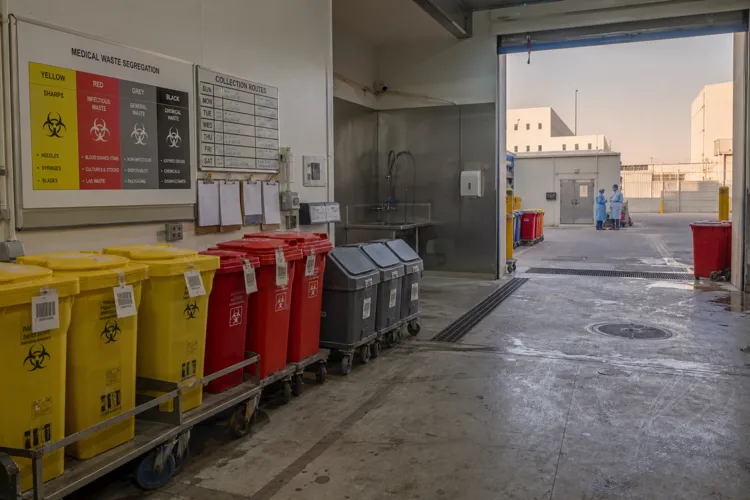
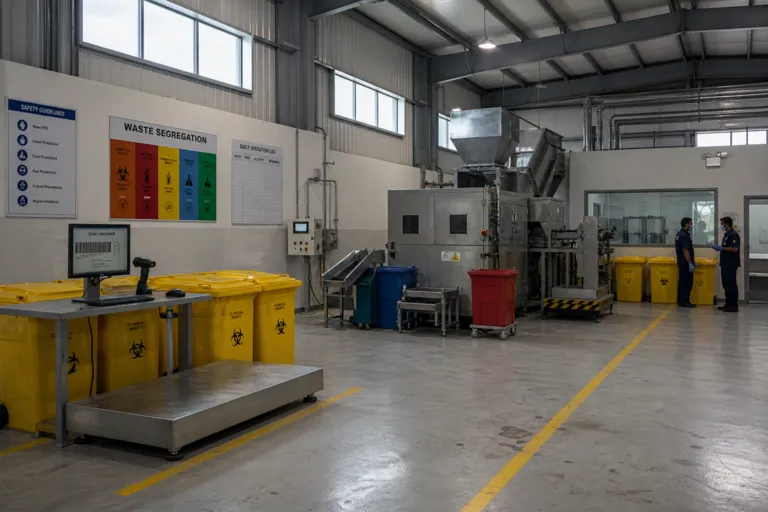
Saudi medical waste management is moving from “basic disposal” to controlled, auditable systems. In MarkWide Research’s market framing, medical waste handling covers the controlled collection, treatment, and final disposition of materials generated during diagnosis, treatment, or immunization, with sterilization parameters typically exceeding 121°C for autoclaving cycles to achieve microbial inactivation. That technical baseline matters because procurement is being pulled by compliance first. MarkWide notes that SFDA medical waste handling guidelines are rebalancing procurement priorities across Saudi hospital networks, aligning service awards to segregation rules, validated treatment methods, and traceability rather than informal disposal.
Regulatory layering is also raising the bar for entry and execution. MarkWide highlights SFDA enforcement of medical waste segregation standards, MOHAP facility licensing requirements, and ISO 14001 environmental management certifications as market access thresholds for new service entrants. It also points to CEA electrical safety mandates affecting treatment equipment used for microwave or chemical systems. At the same time, Saudi Vision 2030 hospital privatization is transferring waste volume ownership from Ministry of Health facilities to private operator contracts, forcing compliance upgrades under SFDA segregation mandates and reshaping procurement timelines across Riyadh and Jeddah medical clusters.
Treatment Choices Are Splitting by Risk, Cost, and Air Emissions
On the treatment floor, the market is not “one technology fits all.” MarkWide’s segmentation says autoclaving holds the largest operational share because of lower capital requirements and residual air emission profiles, while incineration keeps priority for anatomical and pharmaceutical waste streams where complete combustion is mandated. Waste types also behave differently. Infectious material is described as generating the highest per-tonne handling cost structure, and sharps containers require specialized containerization and tracking protocols. In global market commentary, Towards Healthcare also emphasizes that incinerators are essential for safe and effective disposal, while noting autoclave growth expectations by treatment segment.
Competitive positioning is being shaped by infrastructure, contracting, and operating discipline. MarkWide describes Saudi Investment Recycling Company (SIRC) as dominating domestic collection infrastructure through state-backed landfill and treatment site development. It also describes how Suez Environment S.A. leverages a European incineration technology footprint to anchor long-term service contracts with Ministry of Health facilities, and how Remondis Medison GmbH sustains competitiveness through specialized hazardous waste transport protocols adapted to Gulf climate conditions. The direction of travel is toward certified third-party contracting, especially as SFDA’s 2024 medical waste segregation standards push hospitals away from informal disposal practices.
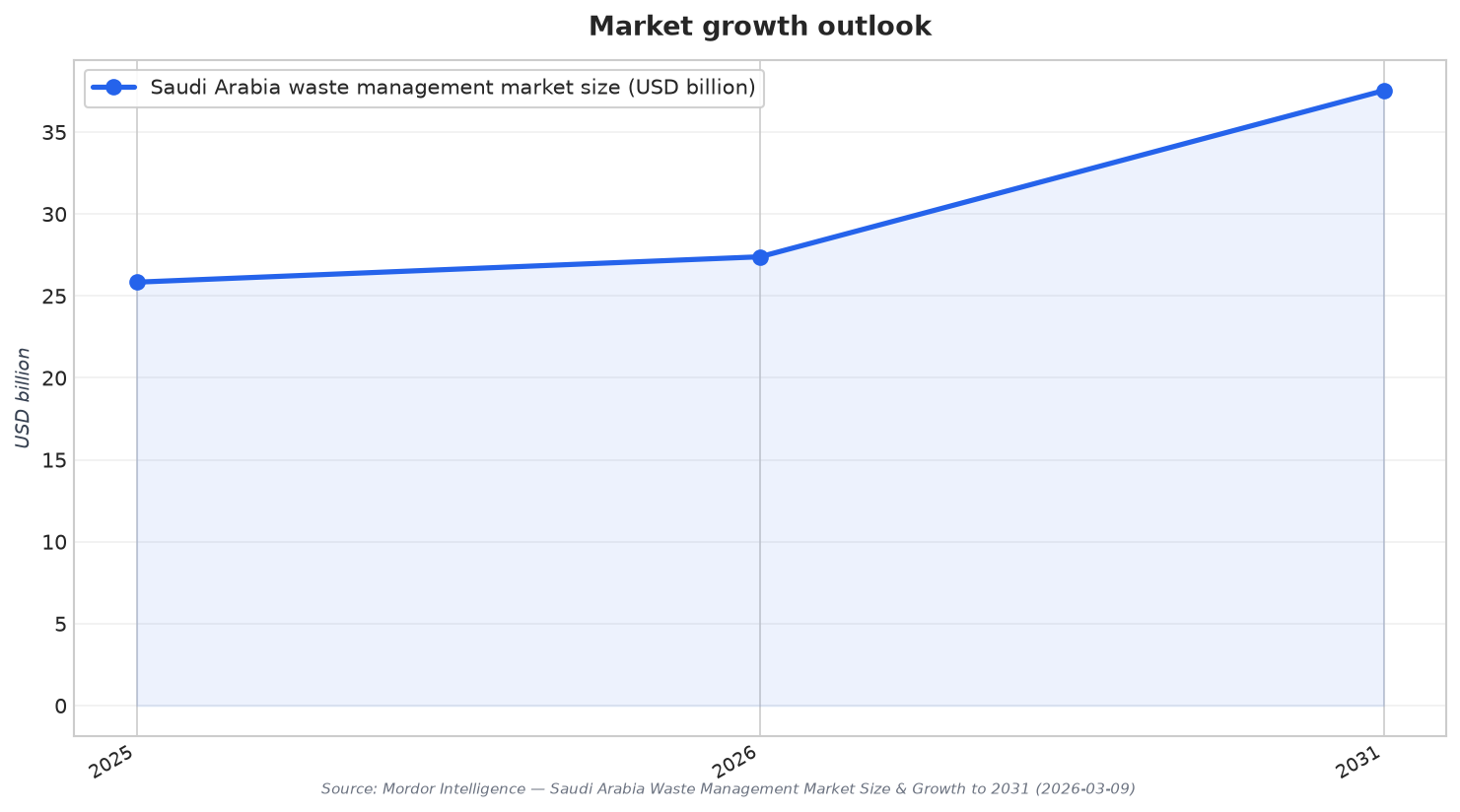
Medical waste does not sit in isolation from the wider Saudi waste economy. Mordor Intelligence values the Saudi Arabia waste management market at USD 25.84 billion in 2025 and estimates growth from USD 27.39 billion in 2026 to USD 37.53 billion by 2031, at a 6.5% CAGR (2026–2031). In that broader market, disposal and treatment services accounted for 53.45% of share in 2025, and Riyadh accounted for 38.5% of market size in 2025. Mordor also reports that SIRC, Veolia, SUEZ, Averda, and BEEAH collectively managed more than 50% of treated volumes in 2025, with SIRC alone recycling 16 million tons of C&D waste that year—scale and logistics capabilities that can influence medical waste contracting expectations.
What is changing fastest in Saudi medical waste management today?
Which treatment method leads by operational share in Saudi Arabia’s medical waste market framing?
What sterilization benchmark is cited for autoclaving cycles?
Which waste types are described as more complex or costly to handle?
How does the broader Saudi waste market provide context for medical waste services?